
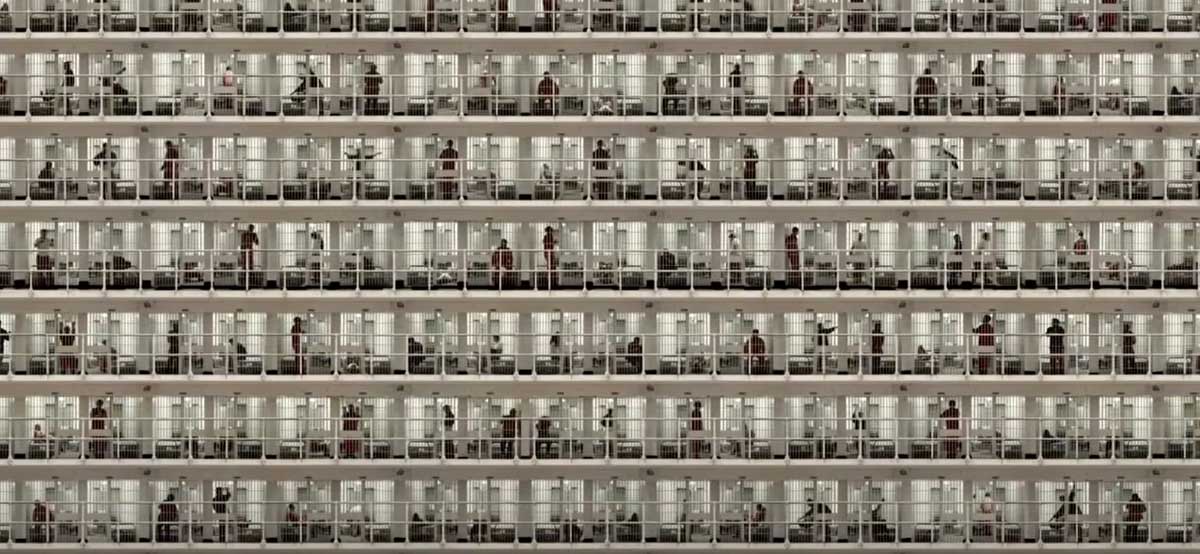
For over two thousand years, the practice of incarcerating offenders has seen minimal innovation, with society slowly moving from the primitive principle of Lex Talionis to imprisonment.
During the 17th and 18th centuries, England, France, and Russia experimented with penal colonies, such as Australia’s Botany Bay, France’s Devil’s Island, and Russia’s Siberian tundra.
However, substantial prison reform began in the 18th century with John Howard, who was appalled by prison conditions and successfully pushed for solitary confinement, professional staffing, external inspections, and improved prisoner welfare.
This evolution led to the concept of the modern correctional facility.
Reflecting on today’s criticised prison conditions, it begs the question of how much more severe they were before Howard’s humanitarian reforms.
San Quentin State Prison, USA
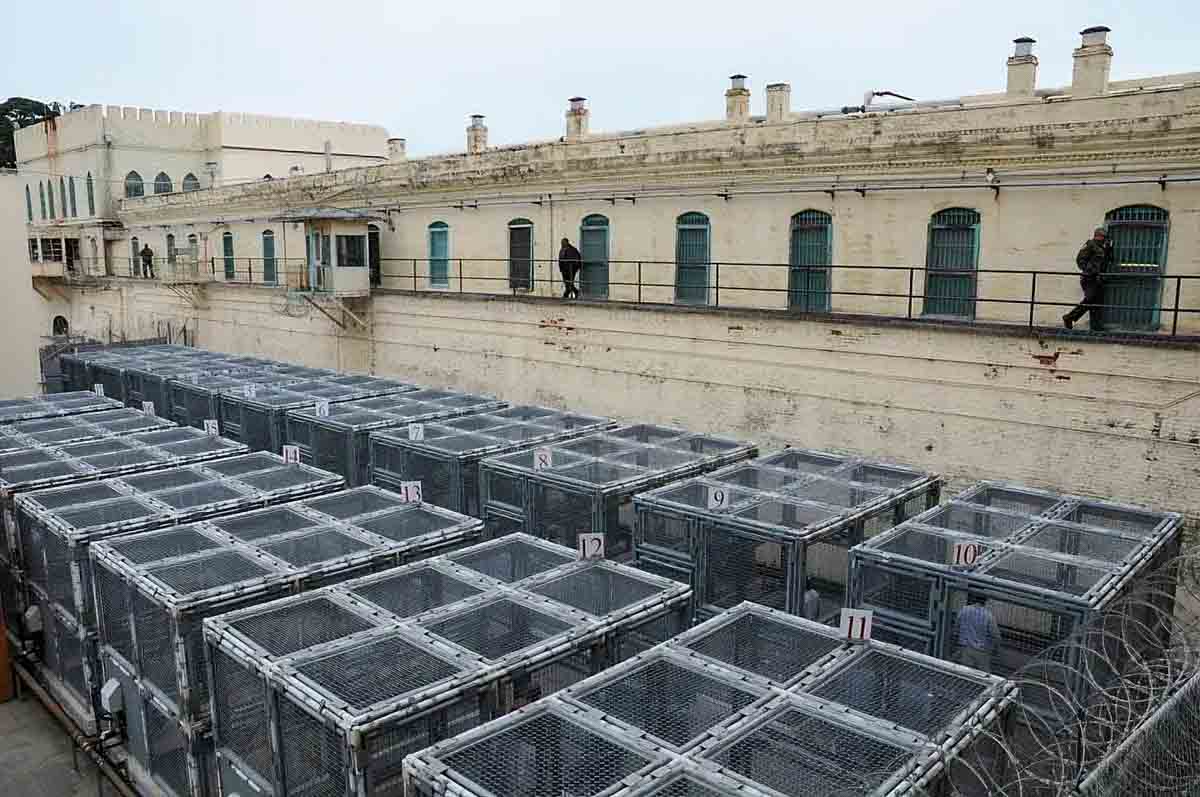
Located in California, San Quentin is a reservoir of prison stories and legends. The prison opened in 1852.
It has the State’s only death row, a gas chamber now only used for lethal injections and has housed some of the most notorious criminals in the country’s history.
It was built to house 3,082 inmates but currently holds 3,542, that is 114.9% of its capacity, one of the main problems and prompting prison violence.
In 1982, a riot erupted that required 24 shotgun blasts to subjugate the uprising that resulted in the serious injuries of 22 convicts and 4 prison guards.
San Quentin: Where America's darkest tales of incarceration come to life, in a facility bursting at its seams.
In February 2006, 100 inmates were injured and two were killed in racially motivated attacks that resulted in a lockdown for 1,800 prisoners.
Health care at the prison does not fare any better.
A 2005 report found that doctors constantly misdiagnose illnesses and operate in filthy conditions.
The report stated: “We found a facility so old, antiquated, dirty, poorly staffed, poorly maintained, with inadequate medical space and equipment and overcrowded.
It is our opinion that it is dangerous to house people there.”
La Sabaneta, Venezuela

“Every society gets the kind of criminal it deserves.”
Robert F. Kennedy
As with most prisons around the world, Venezuela’s most notorious correctional facility suffers from overpopulation.
Originally built to house 700 inmates, La Sabaneta is now home to 3,700 prisoners who are guarded by a measly 40 prison guards.
The inmates are forced to string up a slew of hammocks overhead in their overcrowded 8×12 feet cells to allow sleeping space for all.
Others sleep on the floor elbow to elbow.
Prisoners bathe from the same water bucket in a corner, and relieve themselves in plastic bags they toss out a barred window onto an open-air patio.
La Sabaneta: A grotesque theater of survival where violence is the only currency.
Violence is rampant and necessary for survival.
Nearly all the inmates carry knives for protection; those who don’t, risk being cut down.
Fierce riots are frequent in La Sabaneta.
In 1994, 108 prisoners died in a gun battle in just one of the many riots registered at this house of horrors, while fires, murders and beheadings also occur regularly.
The decaying infrastructure of notorious correctional facilities presents grave issues: tainted drinking water, minimal medical care, and inmates compelled to self-administer medical treatments.
Cases of AIDS, tuberculosis and typhoid are not rare.
Diyarbakir Prison, Turkey
“He who opens a school door, closes a prison.”
Victor Hugo
Americans got their first exposure to Turkish prisons with the film Midnight Express, but the movie fell short of reality in its portrayal of the prison horrors in the country.
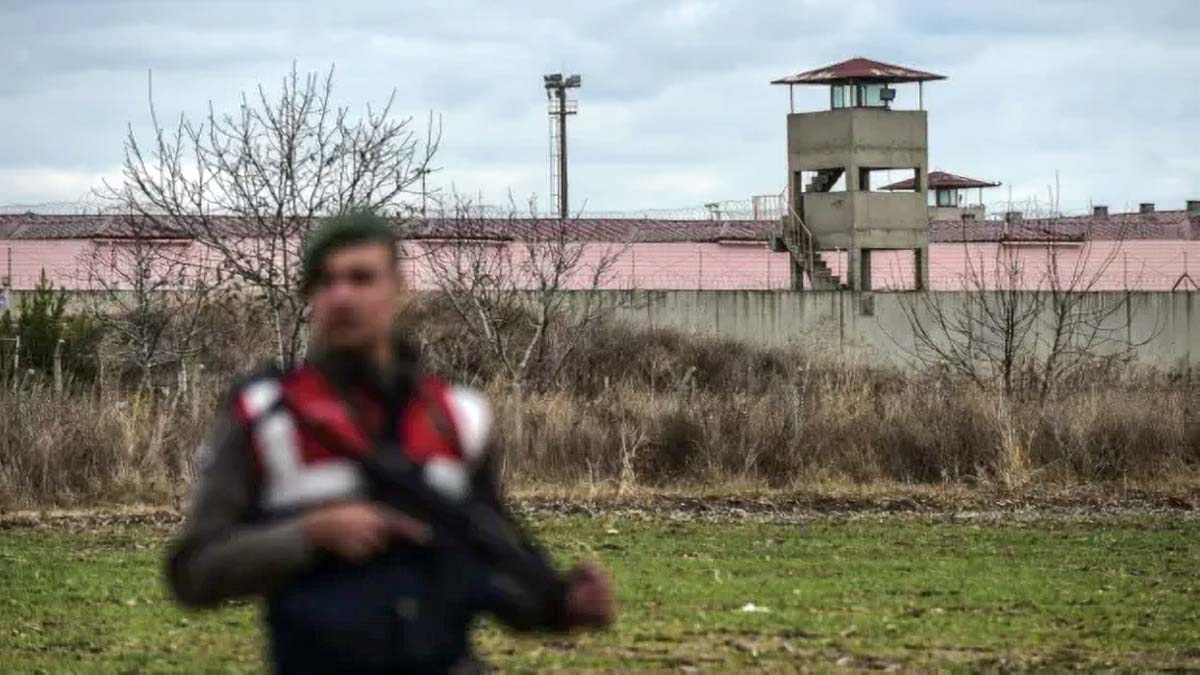
Diyarbakir is notorious for its use of torture on inmates, children sentenced to life, sewage-flooded hallways, overcrowding and murder.
In 1996, guards and special forces stormed the prison killing 10 and injuring another 46, 9 of which were left in critical condition.
Diyarbakir, a name synonymous with the horrors of torture and neglect, eclipses even the darkest cinematic portrayals.
An investigation revealed that the prison guards may have masterminded the attack.
Diyarbakir has also seen countless suicides and hunger strikes to protest against the conditions at the prison and they systematic torture.
Mendoza Prison, Argentina
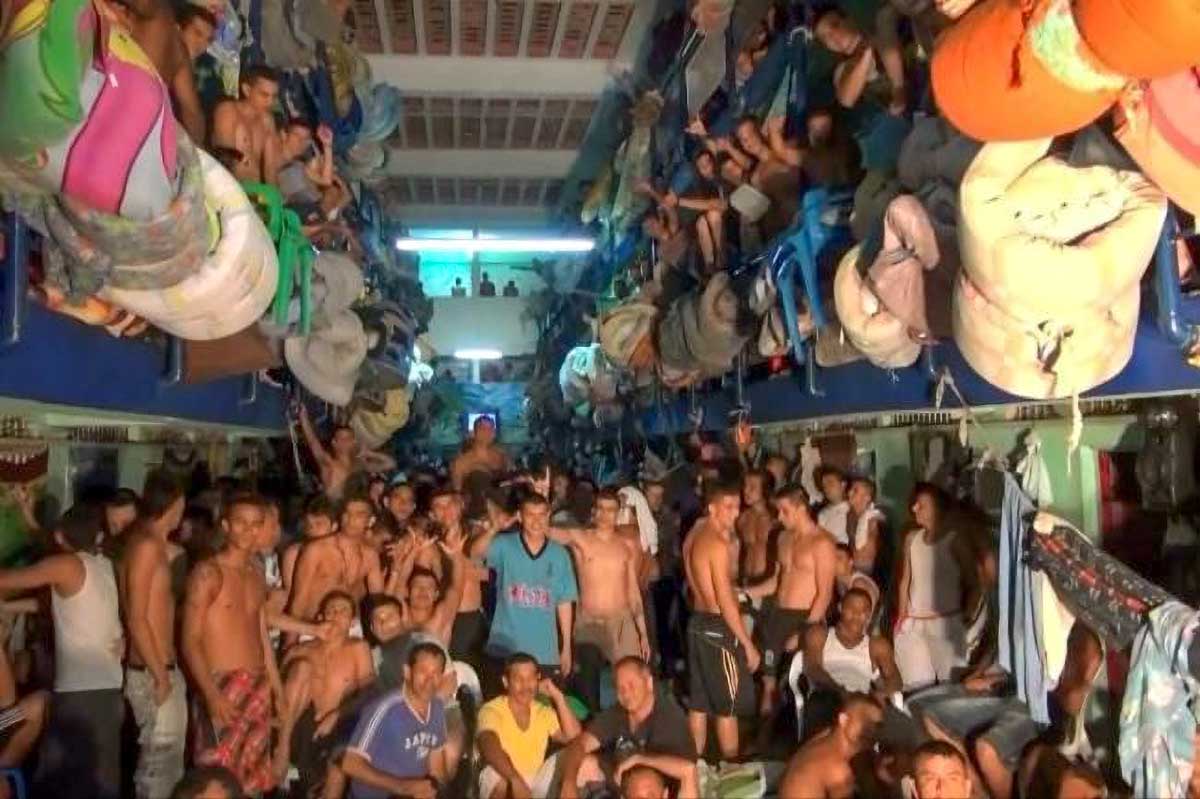
The severe overcrowding at Mendoza prison in Argentina, where 1,600 inmates are crammed into a space meant for 600, starkly illustrates the human rights consequences of prison overcrowding.
This dire situation, highlighted by Amnesty International in 2005, is a breeding ground for death, torture, and inhumane treatment.
The overcrowding exacerbates the cruel and degrading conditions, leading to a cycle where inmates, many of whom await trial and sentencing, face worsening prospects for rehabilitation.
The sewn mouths of Mendoza's inmates: a silent, harrowing protest against a world that's turned its back.
The desperate measures taken by prisoners, such as sewing their mouths shut in protest and frequent riots, underscore the urgent need for reform.
Additionally, the abusive behavior of prison guards towards inmates and their families further compounds the issue.
This was tragically evidenced by the experience of a young inmate, whose basic dignity was stripped away as he faced maltreatment and threats, painting a harrowing picture of the human rights implications tied to overcrowded prison conditions.
Riker’s Island, USA
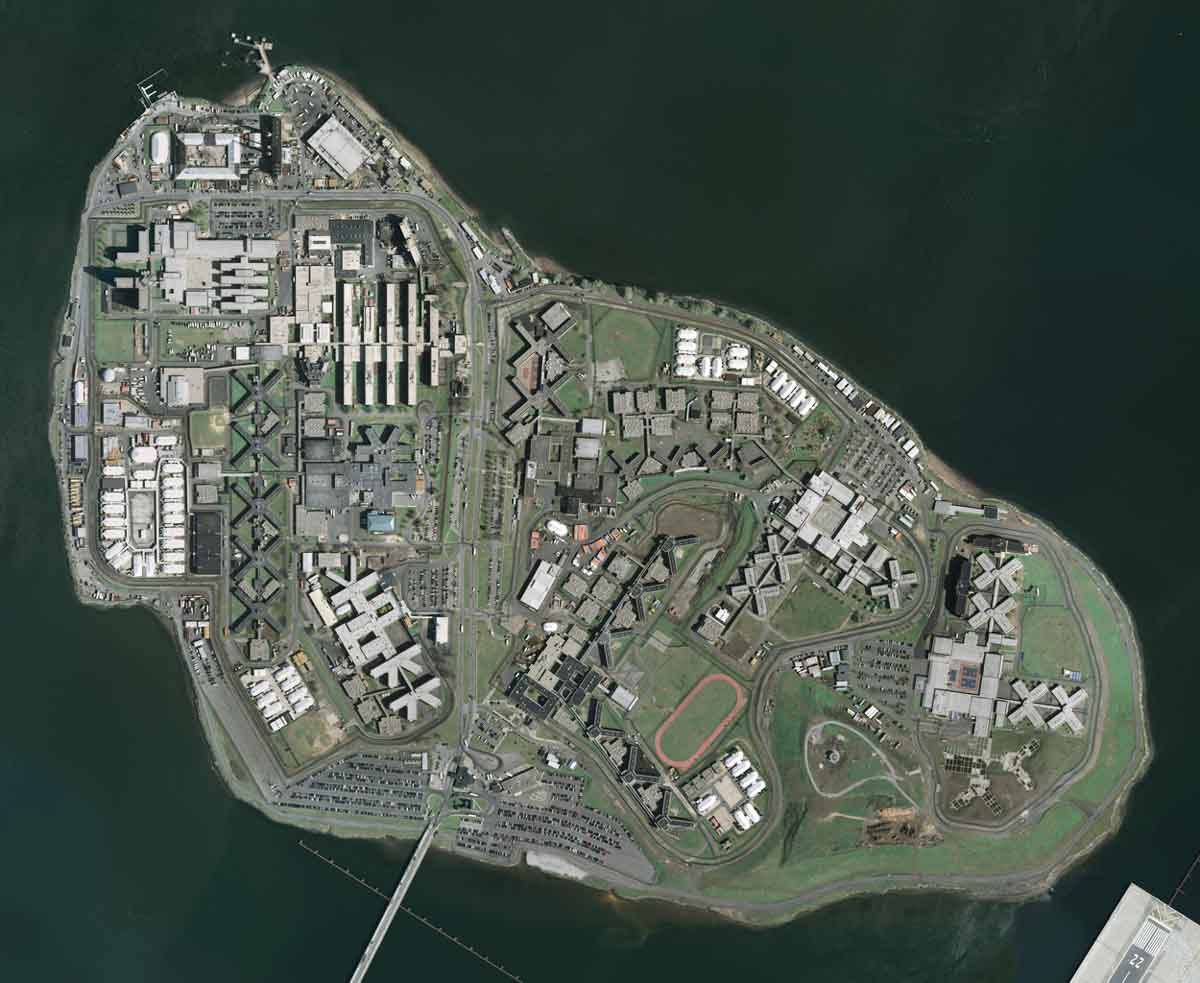
The infamous New York City penitentiary has been described by inmates as “worse than the roughest New York City streets”.
Prisoner violence is legendary and widespread.
A former prison guard denounced the situation stating that the numerous bloody beatings and even murders were a constant source of fear for him.
The reform of Riker's Island: A story of turning to draconian measures to cage an ever-growing beast of violence.
In a bid to reform the prison, city officials have made Riker’s Island the strictest prison in the country.
SWAT teams were called in to aid in curbing the violence and murders and are now in charge of cracking down on riots, searching cells on a daily basis to confiscate hundreds of makeshift weapons.
Charges can now be brought against inmates that attack other inmates or guards, bringing the stabbing rate from 1,000 a year to around 70.
Tadmur Military Prison, Syria

“It is said that no one truly knows a nation until one has been inside its jails.”
Nelson Mandela
Located 200 km northeast of Damascus in the Syrian desert, Tadmur prison has become infamous for torture, summary executions and harsh conditions.
Such were the conditions that Syrian poet Faraj Beraqdar, a political prisoner for five years there, called it the “kingdom of death and madness.”
Tadmor prison was the scene of a brutal massacre in 1980 when Commando forces from the Defence Brigades and the 138th Security Brigade helicoptered into the prison and slaughtered 500 inmates in their cells.
Tadmur's history of torture, executions, and extreme conditions reveals a deep-seated disregard for human life.
It is unknown how many more were executed by hanging thereafter or died from medical neglect or torture.
A former political prisoner had this to say regarding the brutal methods employed by the prison guards: “They used incredible methods to kill people.
Courtyard Four had a raised basin, for plantings. Tens of people died there.
They were hit with the sharp edge of an axe, and then cut up into pieces.
Prisoners were also roped and dragged until they died.
This would be done randomly, to those who were found innocent by the court as well as to those who were sentenced to death.”
La Santé, France
“A society should be judged not by how it treats its outstanding citizens but by how it treats its criminals.”
Fyodor Dostoevsky
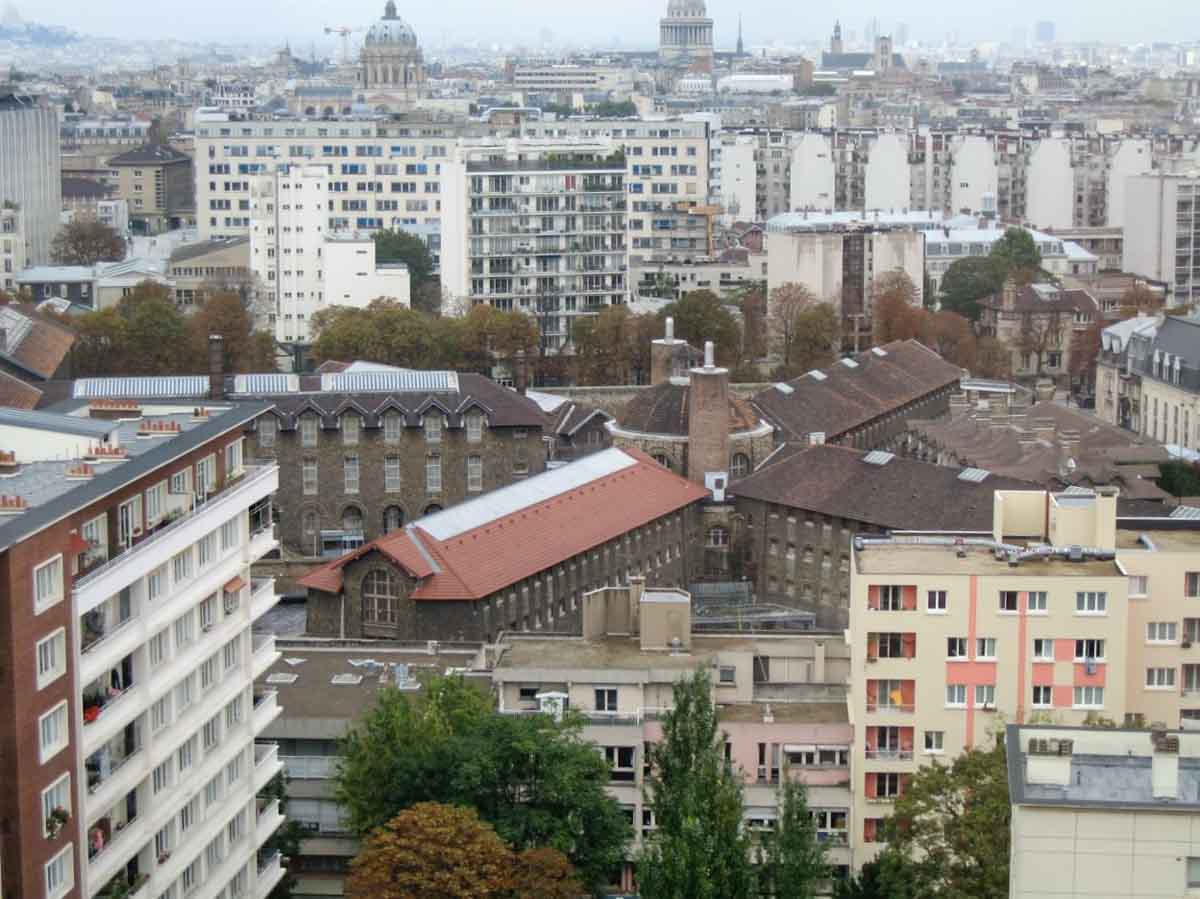
Much has been written about the Parisian Prison of Good Health, none of it good.
Veronique Vasseur, the prison physician, wrote a book in 2000 denouncing the horrible conditions of the penitentiary, where depression and suicide are extremely common; so much that prisoners with no other means have swallowed drain cleaner as a way to relieve the pain of life.
La Santé: Where the promise of 'good health' is cruelly twisted into a tale of despair and death.
Now read this. La Santé experienced 124 suicides in 1999, compared to 24 in the entire California prison system with 160,000 inmates.
Infested with rats and lice, the worst vermin in the complex seems to be the guards, who have been consistently accused of sadism and brutality.
Administrative Maximum Unit Prison (ADX), USA
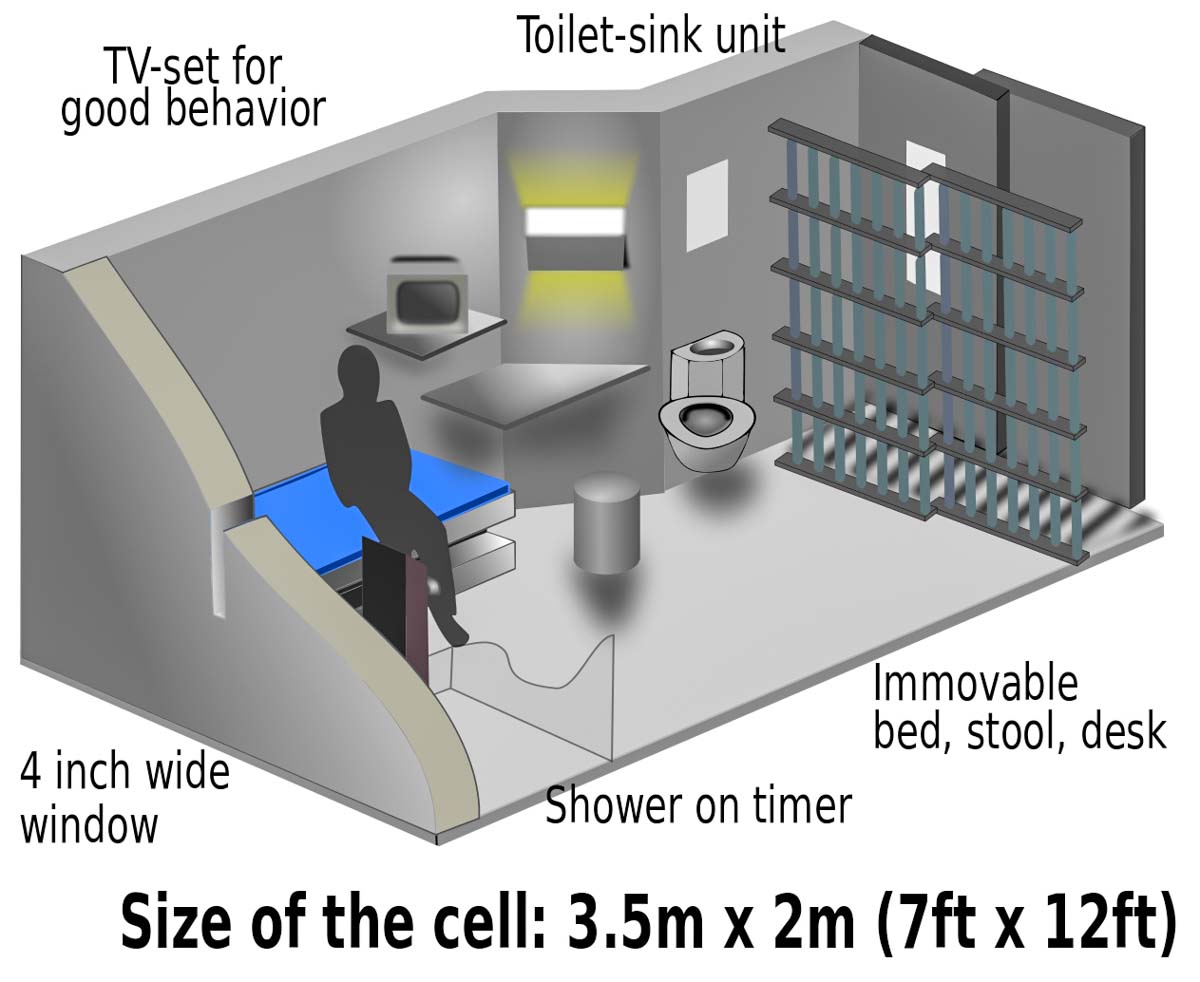
Unlike the other prisons in this list, the Colorado supermax prison has no overpopulation, diseases, violence, brutality, riots or anything of the sort.
It has been described by a former warden as “a cleaner version of hell”, while notorious inmate Eric Rudolph, the Olympic Park bomber has said that ADX “is meant to inflict misery and pain”, but granted, in a subtler way.
ADX wins out in cruelty because it employs repressive techniques of isolation and sensory deprivation. Inmates are only allowed out of their cells for nine hours each week, and all prisoners are required to eat, sleep and defecate in their cells.
In the eerie silence of ADX, the absence of violence is replaced by the deafening roar of isolation.
The amount of sunlight and artificial light received by inmates is strictly limited; it’s as if you’re locked in your bathroom for 22 hours a day.
There’s almost no human interaction, not even with the guards.
ADX is proof that brutality doesn’t need to be violent to inflict harm.
Carandiru, Brazil
“All punishment is mischief; all punishment in itself is evil.”
Jeremy Bentham
Mercifully, Carandiru penitentiary, the subject of many studies and movies, has been shut down since 2002.
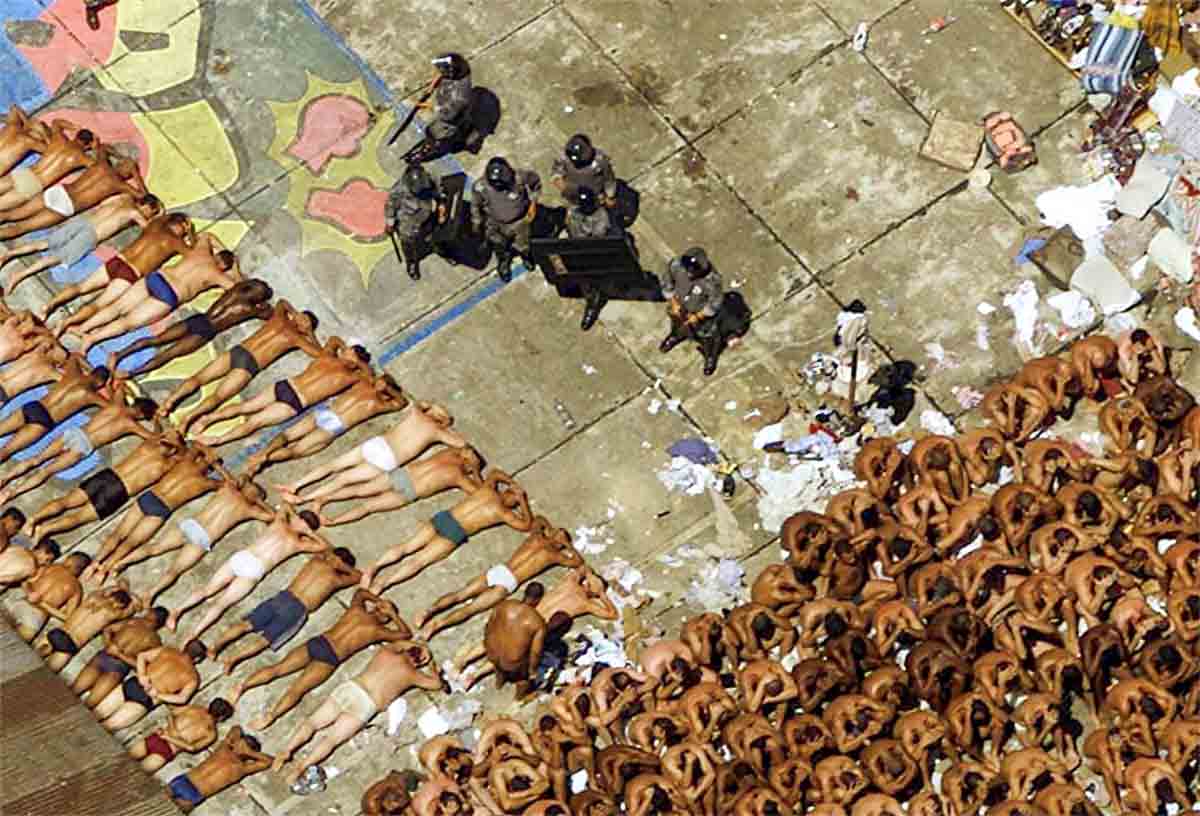
But let no one forget the massacre that took place there in 1992 when military police stormed the prison and left 111 dead that revealed to the world the staggering cruelty of the institution.
But before the massacre unfolded, another slaughter was brewing inside: one out of every five inmates in the prison had been diagnosed with HIV, and prisoners often underwent surgery without anesthesia.
The bloodbath of 1992 in Carandiru: A stark illustration of how a system meant to rehabilitate can instead annihilate.
It was reported that even the prison medical director didn’t set foot inside the facility for years.
Torture and suffering were rampant, a consequence of severe overcrowding in the prison, which the authorities admitted they could not control.
Tacumbú prison, Paraguay

Tacumbú Prison in Paraguay, significantly overpopulated, houses approximately 4,000 inmates despite a capacity of 800.
Situated in a working-class neighborhood of Asunción, the capital, it’s notorious for its dangerous conditions and high murder rate.
Tacumbú Prison, a cauldron of chaos and violence, reflects the extreme challenges of overpopulation and inadequate control.
The prison experiences frequent and violent gang clashes, contributing to an average of one death every two weeks.
With only 40 to 43 guards for thousands of inmates, control and drug prevention are major challenges.
The prison’s grim reality was highlighted in the documentary “Inside the World’s Toughest Prisons,” where journalist Raphael Rowe spent a week uncovering the life inside.
Overcrowding in Prisons: Humanity’s Forgotten Crisis
As we delve into the horrors of prisons from La Sabaneta to ADX, it’s hard not to wonder if people have imprisoned humanity itself.
These tales of despair and degradation aren’t just about concrete and bars; they’re about a society that has forgotten the ‘correctional’ in ‘correctional facilities.’
It’s ironic, really, how earthlings preach human rights with one hand and snatch them away with the other.
Maybe it’s time humans realise that the real crime is how they have let their prisons turn into factories of despair.
The stark reality of overcrowding in prisons further underlines this tragedy, as these cramped spaces strip away dignity and exacerbate inhumane conditions.
You might like Innocent Person on Death Row: 10 Tales of Judicial Miscues in the U.S.