
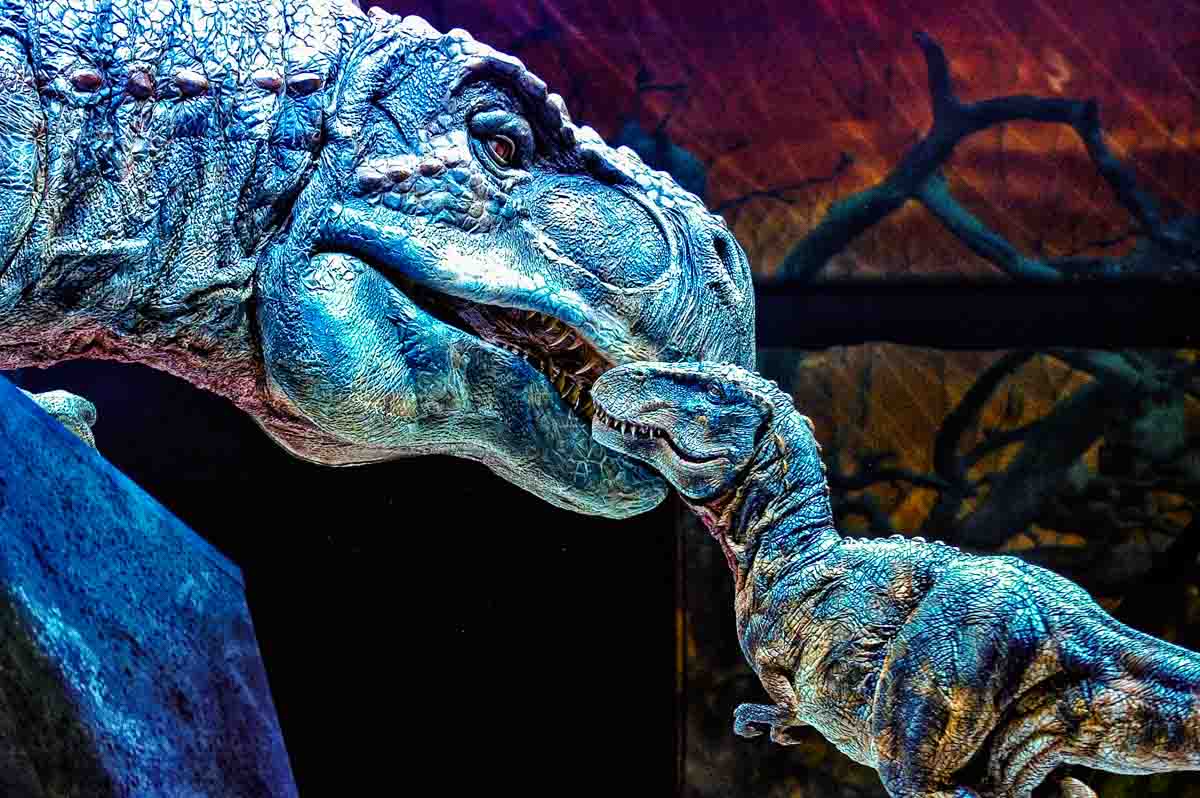
The movie Jurassic Park reminded all of us of those giant lizards that roamed the Earth, Brontosaurus, Tyrannosaurus Rex, Triceratops…
Those gigantic creatures we all learned about at school, but have conveniently and unfortunately forgotten, but besides the names of just a few, we know nothing else.
You might think these matters are hardly worth your time, that you’ve done your degree, you know all you need to know, and you have a high-paying job, but “knowledge makes a man unfit to be a slave”, as Frederick Douglass once said, and it makes you interesting.
Read on, here’s everything you need to know about dinosaurs.
When Was The First Fossil Discovered?

The narrative of dinosaur fossils, those prehistoric treasures, has roots stretching back to 1822 with Gideon A. Mantell, a British physician and fossil enthusiast.
His discovery of the ‘Iguanodon’ marked a significant milestone in the story of paleontology. However, this wasn’t humanity’s inaugural encounter with dinosaur remains.
Imagine Mantell's awe and wonder as he unearthed what was to become the gateway to an unknown, prehistoric world, shaking the very foundations of natural history.
Ancient civilizations, like the Greeks and Romans, likely stumbled upon these relics, sparking myths of dragons and other mythical creatures.
Reverend Plot’s 1676 discovery of a large femur in England and Chang Qu’s writings about ‘dragon bones’ in China centuries earlier are testament to this long-standing fascination.
Today, this intrigue is preserved and showcased in dinosaur fossils museums, such as the Perot Museum and the American Museum of Natural History, which stand as custodians of these ancient wonders, bridging the gap between past and present.
Where does the word “Dinosaur” Come From?
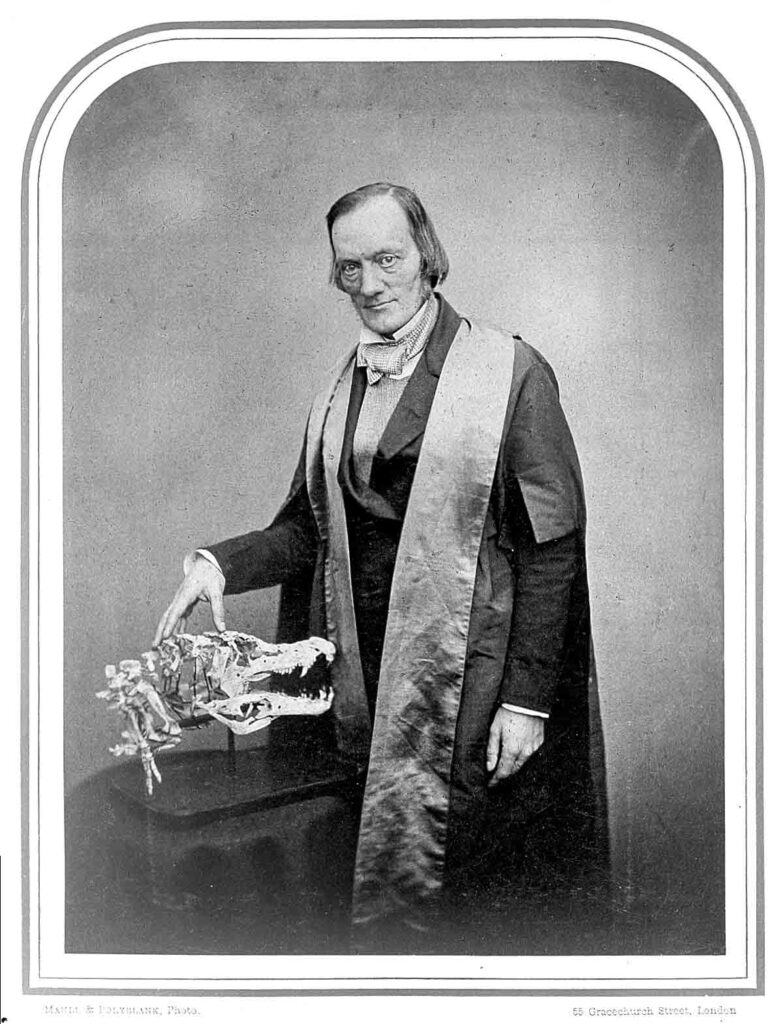
The word “dinosaur”, from the Greek meaning “terrible lizard”, was first coined by British anatomist Sir Richard Owen (1804-1892).
Sir Richard Owen didn't just give us a word; he gave us a lens through which to view a fragmented world of prehistoric wonders.
Upon examining some bones, Owen realized they belonged to a suborder of extinct reptiles as they had certain common characteristics, like five fused vertebrae fused to the pelvic girdle and column-like legs.
When Did The Dinosaurs Appear?
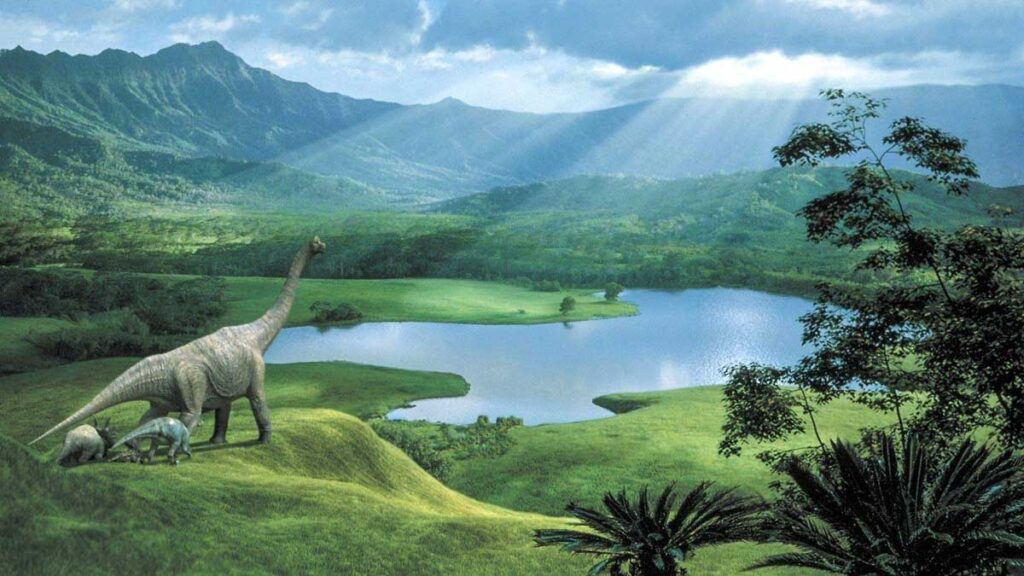
Dinosaurs inhabited the Earth between 230 and 65 million years ago, during the Triassic, Jurassic and Cretaceous eras.
The first dinosaurs appeared in the middle to late Triassic period, about 230 million years ago. But they were preceded by the archosaurs (“ruling lizards”) and therapsids (“mammal-like reptiles”), and lasted for 20 million.
The sheer span of time they occupied our planet is staggering, dwarfing our human timeline into a mere evolutionary blip.
Dinosaurs began to appear and dominate the habitat at the beginning of the Jurassic period, about 200 million years ago.
How Long Were The Dinosaurs Around?
“It is not the strongest of the species that survives, nor the most intelligent; it is the one most responsive to change.”
Charles Darwin
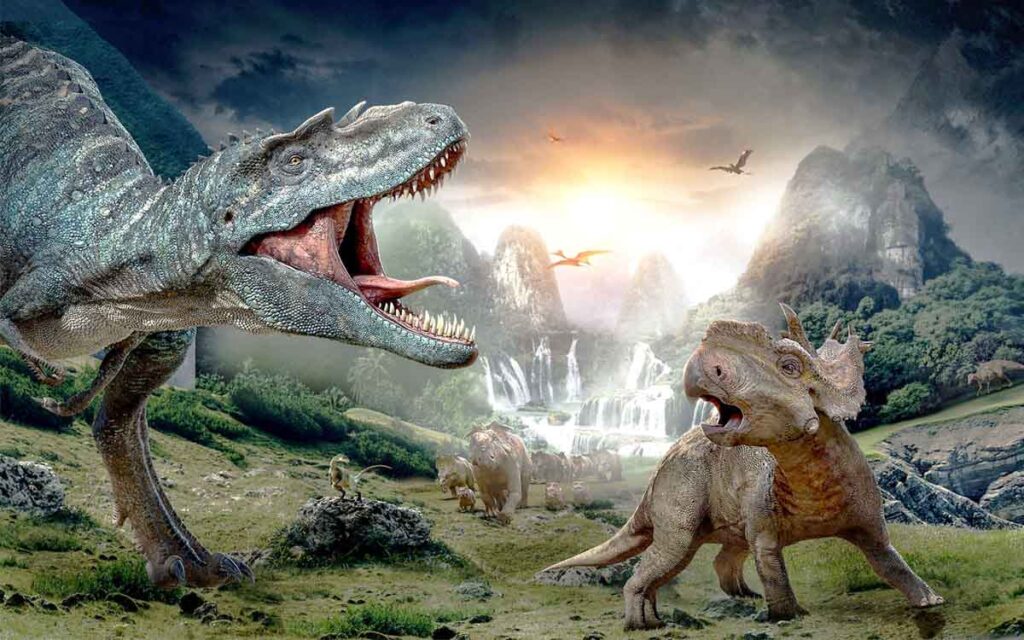
Dinosaurs prospered for over 150 million years before disappearing, victims of the k-t extinction event.
Feeling superior because you're human? Dinosaurs had a reign 750 times longer than human civilization.
Humans, in comparison, have only been around for a few hundred thousand years (and civilization is only 10,000 years old!), so even though they went extinct, they were highly successful as a species.
Did Mammals Take Over After The Dinosaurs Disappeared?
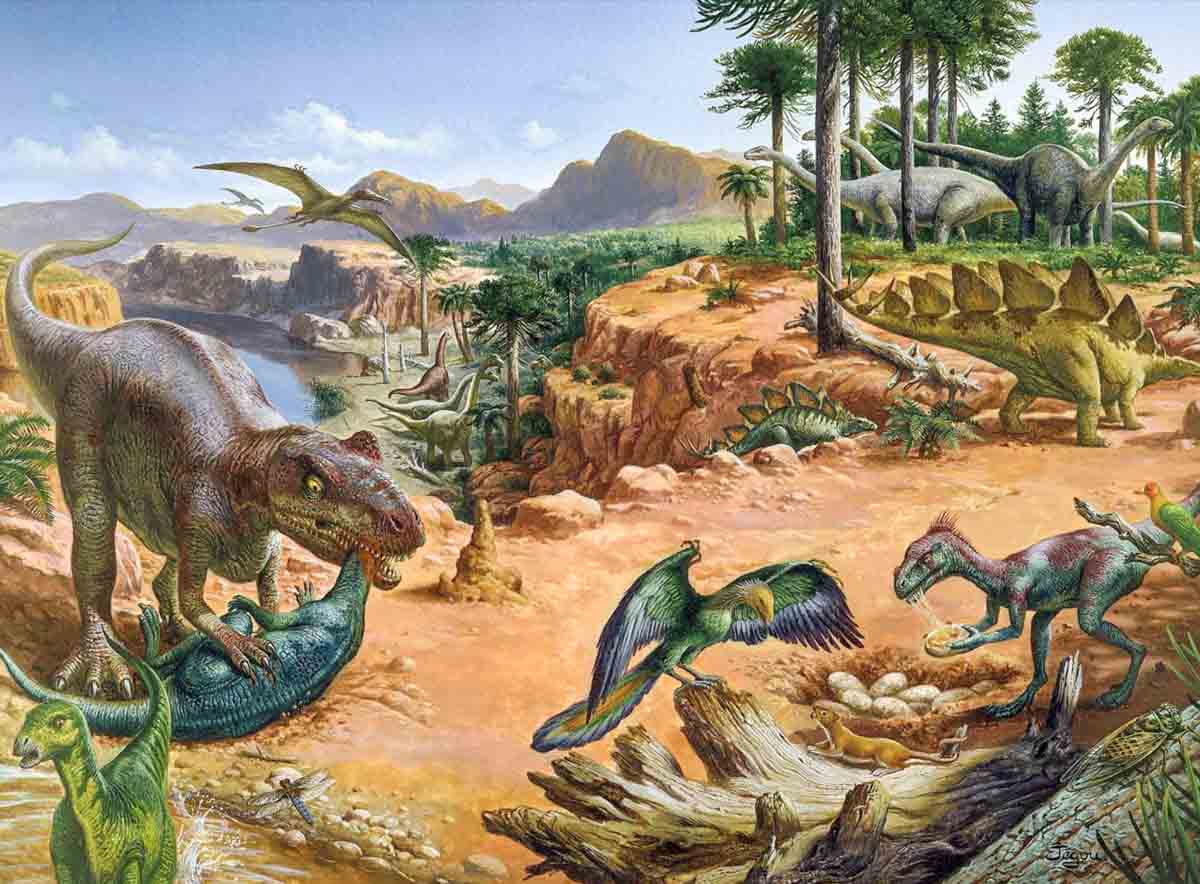
“The dinosaurs disappeared because they could not adapt to their changing environment. We shall disappear if we cannot adapt to an environment that now contains spaceships, computers – and thermonuclear weapons.”
Arthur C. Clarke
Contrary to popular belief, mammals did not succeed the dinosaurs 65 million years ago after the k-t extinction event.
Mammals and dinosaurs often shared the same habitat and lived alongside during the Mesozoic Era.
Thought mammals were just waiting in the wings for dinosaurs to bow out? They were co-stars, albeit in supporting roles.
Mammals, at that time, were about the size of mice, with rare exceptions like the dinosaur-eating Repenomamus weighing as much as 50 pounds, small compared to T. Rex but large for an ancient mammal.
Are Birds The Descendants of Dinosaurs?

The study of transitional fossils linking dinosaurs and birds has significantly advanced our understanding of evolutionary biology.
These fossils illustrate a fascinating evolutionary bridge during the late Jurassic and Cretaceous periods, where small, feathered theropod dinosaurs evolved into modern birds.
Next time you hear birdsong, consider it a prehistoric melody—an echo from the age of dinosaurs.
A notable example is the Microraptor, a feathered, four-winged dinosaur, which, despite not having living descendants, plays a pivotal role in demonstrating the evolutionary processes.
These transitional fossils are essential in revealing the intricate links between ancient dinosaurs and today’s birds.
Were The Dinosaurs Cold-Blooded?
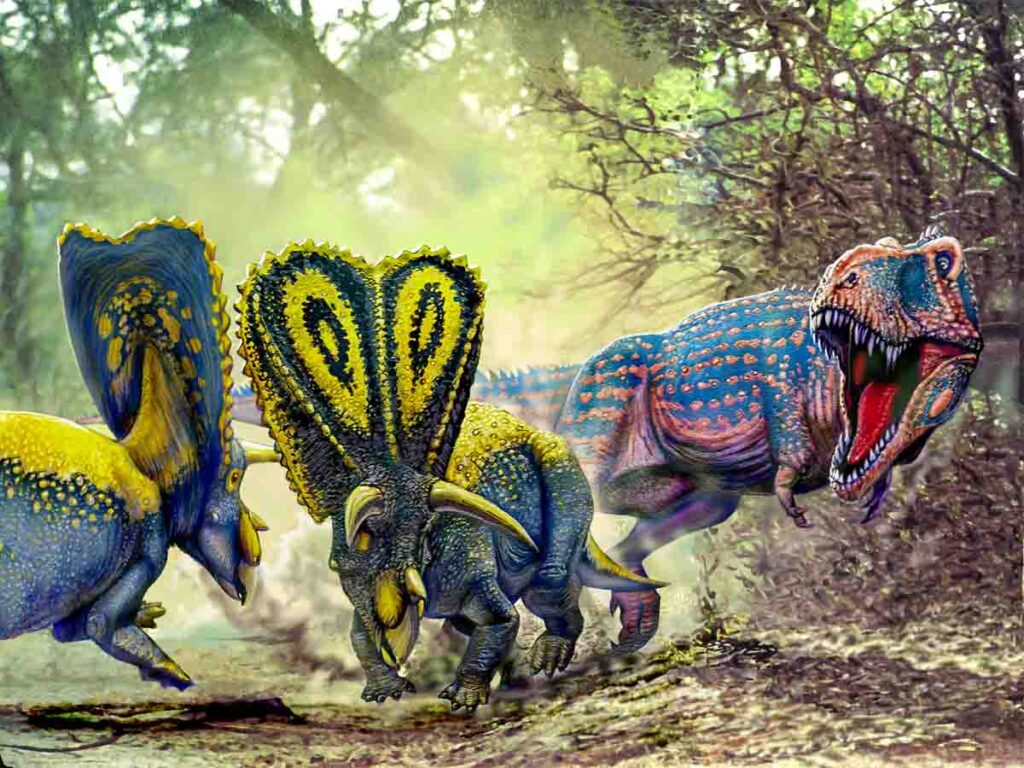
Reptiles, like turtles and crocodiles, are “ectothermic”, meaning cold-blooded.
They rely on the environment to maintain their internal body temperatures.
Think dinosaurs were cold-blooded? Try maintaining a predatory lifestyle without the zest of endothermy; not so simple, is it?
Mammals, on the other hand, are warm-blooded, or “endothermic,” with heat-producing metabolisms that maintain a constant body temperature regardless of the external environment.
Some carnivorous dinosaurs were most likely warm-blooded as maintaining a predatory lifestyle with a cold-blooded metabolism is unimaginable.
Were The Dinosaurs All Meat-Eaters?

Most dinosaurs were herbivores while a smaller percentage were either carnivores or omnivores, something which is reflected in all animal populations.
There have to be more organisms at the lower levels of any food chain because the transfer of food energy is inefficient and much of the energy is lost at each stage of the process.
This distribution along the food chain also keeps animal populations in check.
If dinosaurs could talk, they’d teach us a thing or two about ecological balance; their dietary habits kept life on Earth in equilibrium.
As the number of carnivores in a community increases, they eat more and more of the herbivores, decreasing the herbivore population.
It then becomes harder and harder for the carnivores to find herbivores to eat, and the population of carnivores decreases.
In this way, the carnivores and herbivores stay in a relatively stable equilibrium, each limiting the others population.
How Many Different Dinosaurs Have Been Discovered?
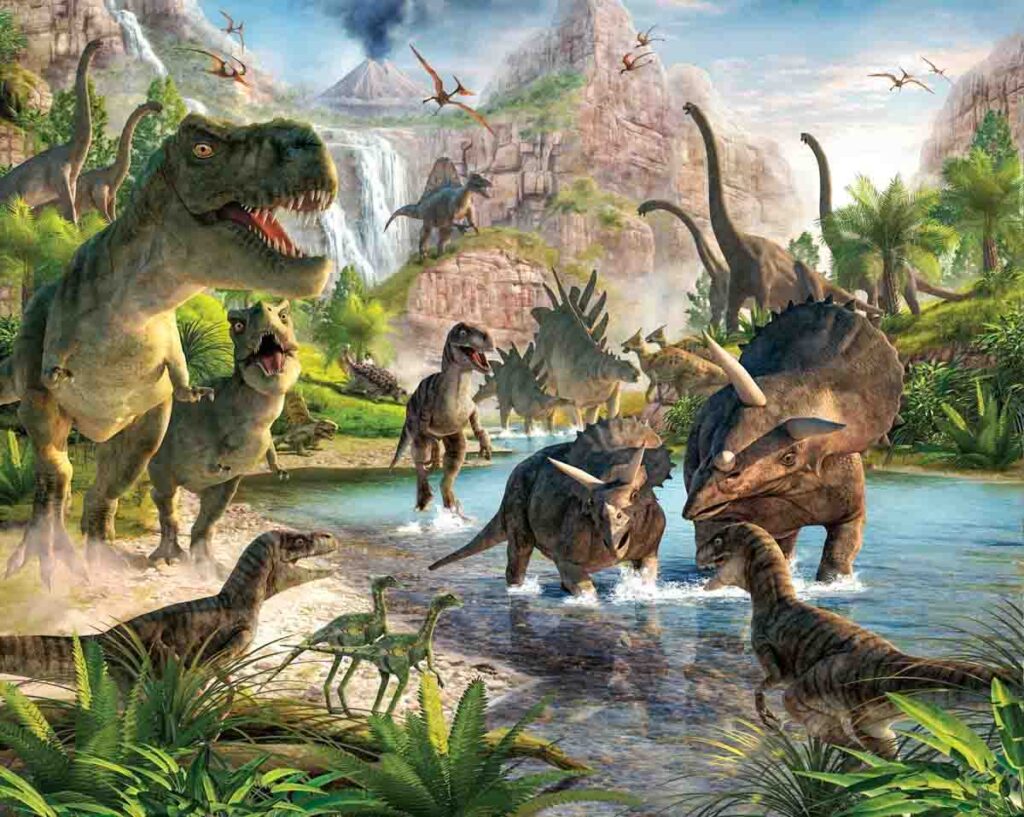
“Of all extinct life forms, dinosaurs are the most popular. Why that should be is not clear.”
Isaac Asimov
Over 700 different species of dinosaurs have been identified and named. However paleontologists believe that there are many more new and different dinosaur species still to be discovered.
We can only know about dinosaurs that leave fossil remains, but fossilization is an extremely rare process.
A treasure trove of unknown species lies hidden beneath our feet; we've only begun to understand the colossal majesty of dinosaur existence.
Fossil evidence is abundant for the late Jurassic era (150 million years ago) and the late Cretaceous era (80-65 million years ago) dinosaurs, but long stretches of geologic time, across various continents, remain unaccounted for.
What Was The K/T Extinction Event?
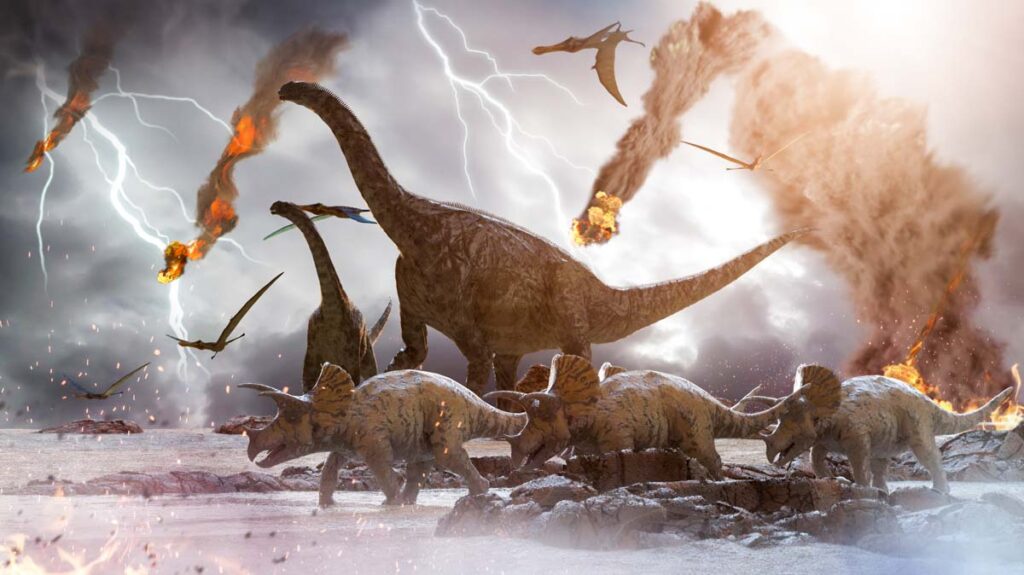
“Sixty-five million years ago the dinosaurs had a bad day.”
Phil Plait
The fearsome dinosaurs, the largest creatures to walk the earth, started dying off in vast quantities about 65 million years ago.
The dinosaur extinction didn’t happen overnight, it took a few thousand years for the dinosaurs to disappear from the face of the earth.
Though many theories had been put forth to explain their extinction, none of them were convincing.
The Alvarez meteor theory—when the sky literally fell and reset the biological clock, making way for the ascent of mammals and, ultimately, humans.
In 1980, Cuban-born physicist Luis Álvarez proposed the meteor theory based upon his observations of iridium in geologic strata, an element commonly found in meteors but rare on Earth.
Years later, scientists found the buried remains of a huge crater in Chicxulub, on Mexico’s Mayan peninsula.
Analysis of sediments demonstrated that this gigantic (over 100 miles in diameter) crater had been created 65 million years ago, and was caused by an astronomical object, either a comet or a meteor, large enough to wipe out the mighty dinosaurs.
Dinosaurs: the gold standard of existence
Were the dinosaurs merely relics of a bygone era, confined to the pages of elementary school textbooks or the realms of Hollywood blockbusters? Far from it.
These majestic creatures roamed the Earth for a staggering 150 million years, leaving behind a legacy that still captivates and fascinates us today.
While you might feel pretty accomplished with your advanced degrees and high-paying jobs, you’ll never reach the dinosaur’s level of life dominance.
They were the embodiment of adaptability and evolutionary success, from the Triassic underdogs to the kings and queens of the Jurassic and Cretaceous periods.
Though modern birds are their only living testament, these majestic beasts continue to intrigue and enlighten us in various ways.
Whether it’s new fossil discoveries that keep paleontologists on their toes or the age-old debates on their metabolism and extinction, dinosaurs will never truly be extinct in our fascination with the past.
So go ahead, continue to live your pedestrian lives, but remember—no one ever made a blockbuster movie about accountants taking over the Earth.
You might like Nature’s Hit List: When Plants Decide to Play Assassin